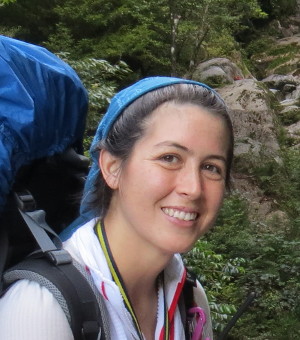






Many hikers ask, "Do I need a guide, or can I walk the trails by myself?"
Of course you can walk the trails alone, but fill out a "Mountain-Climbing Notification" form before you go, and keep your plans flexible. You can ask at your accomodations or stop by a tourist information booth to get a form and ask about weather and trail conditions. Also, if you're hiking without a guide, I recommend sticking to popular trails. They are popular for good reasons, and some disused trails do not actually exist as marked on maps.
Pros:
- Don't get lost.
- They're watching out for you.
- In case of emergency. . .
- They know the terrain.
- Someone to talk to.
- They can offer technical advice
- They carry a lot more than you do.
- They can help you plan.
- They each have their own specialty.
- They'll keep you in line with local etiquette.
NGuides take you on trails that they know and help you arrive at your destination safely and timely, whether that's a mountain shelter or the last bus.
A guide's number one concern is your safety. They strive to keep you hydrated and focused and offer advice as best they can (even when that means calling it a day).
A guide carries a first-aid kit. Many guides also carry tranceivers, emergency shelters, and basic rescue equipment and take first-aid and wilderness training courses.
They know where dangerous stream crossings, ropes, and open bridges are. They know from experience where people often slip or bump their heads, and what areas tend to be the most difficult for their guests. They know good spots for eating lunch or taking shelter. They can sometimes recommend side trails.
Especially on long hikes, such as the 22-km hike to Jomon Sugi and back, you may appreciate the company.
Are you new to hiking or curious about how to fit your pack or use your hiking poles?
Especially on 2-day hikes, you'll appreciate your guide for carrying first aid equipment, food, and shelter supplies.
If you tell your guide in advance what kind of hike you're looking for, she can help you pick a trail and tell you what preparations you'll need to make.
If you're looking for a guide that speaks English, or a guide that knows plants, or a guide that knows how to relax, or one that will push the pace, there's a guide for you!
You may not always appreciate that, but folks who come after you will.
Cons:
- Committing to a schedule
- Staying with the group
You'll need to commit to a certain date when you book a guide, and that may happen to be a rainy day.
For liability reasons, guides like to keep their clients within site. When trails are crowded, they'll want you to stick close, so that you can pass and be passed by other groups easily.
How do you choose a guide?
- Choose from the list of Official Certified Guides of Yakushima (page in Japanese). Established in 2016, all members must also be members of the Yakushima Tourism Association and the Japan Mountain Guide Association, which requires periodic coursework and training. Many members take additional courses with Wilderness Medical Associates.
- Choose from the list of guides registered with the Yakushima Tourism Association. Requirements include residence in Yakushima and annual CPR practice. If you call the Tourism Association (in Japanese), they will try to match you with a registered guide who best meets your needs.
- Inquire at your accommodation. Many establishments have guides they regularly work with.